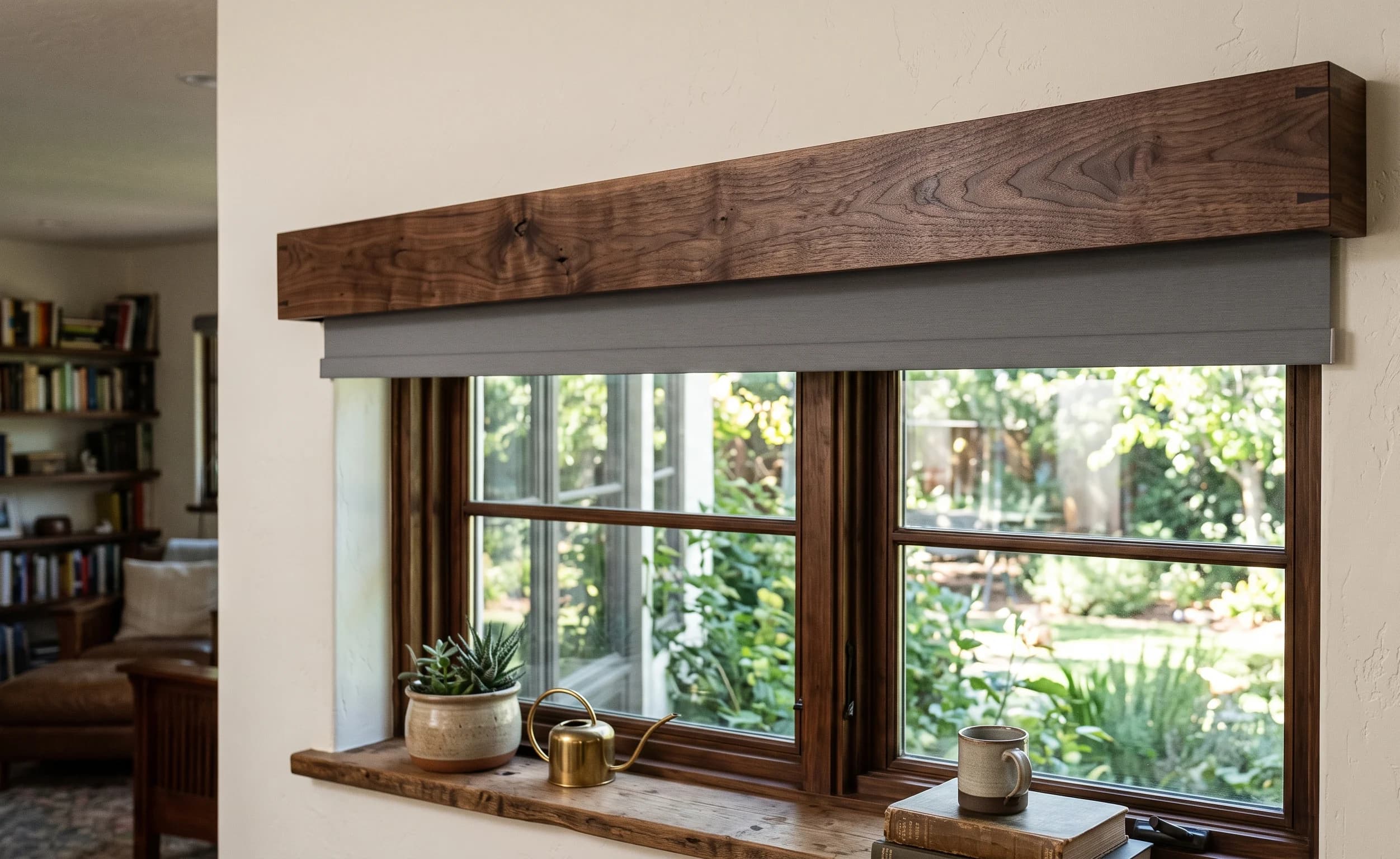
How I Hid Ugly Smart Blinds Inside a Custom Hardwood Window Valance
 Pedro Arian Viena··Updated June 1, 2026·26 min read
Project Specifications & Materials
Why I Built Furniture Around My Smart Home Instead of Accepting Ugly Automation
There is a strange contradiction with smart home technology. The technology itself keeps getting better. The interfaces become cleaner. The automation becomes more intelligent. But the physical hardware often still looks like something designed for a commercial office. That was exactly my problem with automated blinds. The functionality was impressive. The appearance was not. I wanted my blinds to open automatically in the morning, close when the sun became too intense, and integrate with my smart home system. The automation worked perfectly. The problem was that every time I looked at the window, I saw the hardware. The plastic roller tube. The exposed motor housing. The wires. The mechanical components sitting above the window like an afterthought. It felt completely disconnected from the rest of the room. The house had carefully chosen furniture, natural materials, and warm textures. Then there was this piece of white plastic technology attached to the most visible part of the wall.
The Problem Nobody Talks About With Smart Home Devices
Most smart home projects focus on functionality. Can it connect? Can it automate? Can it respond to voice commands? Those are important questions. But there is another question that becomes more important as your home becomes more refined: Does it belong visually? A smart speaker can hide on a shelf. A smart thermostat can replace an old one. A sensor can disappear into a corner. A window covering is different. It occupies a large architectural element of the room. You see it every day. That means the design matters. A technically impressive device can still feel wrong if it interrupts the space around it.
Why I Didn't Buy Expensive Designer Smart Blinds
The obvious solution would have been buying premium automated blinds. There are companies making beautiful systems. The problem is the cost. A complete smart blind installation can become extremely expensive, especially with multiple windows. And even expensive systems still have the same fundamental challenge: The mechanism has to exist somewhere. There will always be a motor. A roller. A mounting structure. A technical component. The question is not whether you can remove the hardware. You cannot. The question is whether you can integrate it properly. That is where custom woodworking becomes interesting.
The Idea: Treat the Blind Mechanism Like Electrical Wiring
When designing a room, we already hide many functional systems. Nobody wants to see:
- Electrical wires running across walls.
- Plumbing pipes crossing a bathroom.
- HVAC equipment hanging in the middle of a room. We integrate them. Smart home hardware should be treated the same way. The motor is not the design. The motor is the infrastructure. The design is the environment built around it. That changed my approach completely. Instead of searching for a better-looking blind motor, I decided to build furniture around the existing mechanism.
What Is a Window Valance?
A window valance is a decorative structure installed above a window. Traditionally, it was used to hide curtain hardware and create a cleaner architectural appearance. In older homes, these details were common. Today, many modern interiors remove them because people associate them with heavy traditional curtains. But the idea itself is still extremely useful. A properly designed hardwood valance can hide:
- Roller tubes.
- Curtain motors.
- Wiring.
- Mounting brackets. While adding a finished architectural detail to the room. It is not just decoration. It is functional furniture attached to the wall.
The First Design Mistake I Almost Made
My first idea was making the valance as small as possible. I wanted it invisible. The logic was simple: Smaller box. Less visible. Cleaner appearance. Then I measured the blind mechanism. The motor needed space. The roller needed clearance. The fabric needed room to move without rubbing. I was trying to make the furniture disappear before understanding the equipment inside. That was backwards. The hidden structure has to respect the technology. Otherwise, you create a beautiful wooden box that doesn't actually work.
Designing Around the Motor Instead of Fighting It
The final design started with the mechanical components. The dimensions were based on:
- Roller diameter.
- Motor length.
- Fabric thickness.
- Mounting brackets.
- Maintenance access. Only after those measurements were finalized did I start thinking about the wood. This is the same principle I used in the hidden homelab cabinet. The technology defines the constraints. The furniture solves them.
Choosing Oak Instead of Covering Everything With Paint
For the material, I considered several options. A painted MDF valance would have been easier. It would also have looked like a construction detail instead of a piece of furniture. I wanted the valance to feel intentional. Something that belonged with the rest of the room. Oak and ash were the strongest candidates. Both have:
- Beautiful grain.
- Good stability.
- A timeless appearance.
- Compatibility with modern interiors. The goal was not making the window treatment stand out. The goal was making it feel like it had always been part of the architecture.
The Smart Home Engineering Behind the Wood
The woodworking was only half of the project. The other half was automation. The blind needed to operate without daily interaction. The final system included:
- A tubular roller motor.
- Zigbee communication.
- ESP8266-based control options.
- Home Assistant integration.
- Automated schedules. The goal was simple: The blinds should behave intelligently without requiring attention. Open slowly in the morning. Close when sunlight becomes excessive. Adjust based on the home's routine. The technology should disappear into daily life.
Why Automation Should Feel Invisible
The best smart home devices are the ones you stop thinking about. Nobody wants to constantly control their house. The purpose of automation is reducing small decisions. Do I need to open the blinds? Should I close them because the afternoon sun is heating the room? Should I remember to adjust them before leaving? A properly designed system answers those questions automatically. The user experience is not the app. The user experience is the absence of unnecessary actions.
The Moment I Realized This Was Not a Blind Project
Halfway through the build, I realized something. I wasn't really building smarter blinds. I was solving an architectural problem. The blind was only one component. The real project was creating a connection between technology and the physical space. The same way furniture hides electronics. The same way walls hide wiring. The same way architecture hides complexity. That became the foundation of the entire build.
The next stage was designing the actual hardwood structure, calculating the internal clearance for the motorized roller, creating access panels for maintenance, and figuring out how to integrate smart controls without turning a beautiful piece of woodwork into a visible electronics project. Designing the Hardwood Valance and Integrating the Hidden Blind Motor The hardest part of this project was not making the wood look beautiful. Woodworking is usually predictable. You choose a material. You cut it. You shape it. You finish it. The technology inside the valance was the unpredictable part. A motorized blind has very specific requirements. The roller needs clearance. The fabric needs a smooth path. The motor needs access to power. The system needs a way to be repaired years later. A piece of furniture can be designed around human use. A mechanical system has no flexibility. That meant the valance had to be designed around the blind mechanism first and the aesthetics second.
Measuring the Existing Blind System Before Designing Anything
The first mistake people make with projects like this is starting with the appearance. They see a beautiful wooden valance online and try to copy the dimensions. That approach rarely works. Every blind system is different. The roller diameter changes. The motor size changes. The fabric thickness changes. The mounting brackets change. Even the way the blind rolls can affect the required clearance. Before cutting any wood, I measured the entire mechanism. I needed to know:
- The total roller length.
- The motor position.
- The amount of space required for rotation.
- The distance from the wall.
- The location of the power connection. The wooden structure was not the product. It was the custom enclosure for a mechanical system.
Creating Enough Space Without Making the Valance Look Bulky
This was the main design challenge. A valance needs enough internal volume to hide everything. But a large wooden box above a window can quickly look heavy. Especially in modern interiors. The solution was creating the illusion of thinness. The outside dimensions were carefully considered. The front face needed enough depth to hide the roller. The sides needed enough clearance for maintenance. The inside needed enough room for movement. But visually, the structure needed to feel lightweight. This is where furniture design becomes different from basic construction. The measurements are not only functional. They affect how the entire room feels.
Choosing Between Solid Wood and Veneered Panels
This was a decision I spent more time on than expected. Solid hardwood was the obvious choice. It looks incredible. It ages beautifully. It matches high-end furniture. But large solid wood panels also have challenges. Wood moves. Especially with changes in humidity. A long, wide piece of solid oak attached near a window will experience temperature and moisture changes throughout the year. For some sections, solid wood made sense. For others, a veneered panel with a stable core was the smarter engineering decision. This is something I learned from furniture building: The best material choice is not always the most expensive material. It is the material that behaves correctly in that specific situation.
Why Oak and Ash Work So Well for Modern Interiors
I considered several wood species, but oak and ash kept standing out. They have qualities that fit this type of project. They are visually calm. The grain is noticeable without being overwhelming. They work with both traditional and modern spaces. They also accept natural finishes extremely well. A window valance is not something you want to dominate the room. It should feel like an architectural detail. The wood should add warmth without becoming the main attraction.
Designing the Front Panel
The front of the valance was the most important visual element. This is the part people would actually see. I wanted clean lines. No visible screws. No obvious hardware. No feeling that the piece was simply covering a problem. The goal was making someone look at it and think: "That is a beautiful wooden architectural detail." Not: "That is hiding a motorized blind." That difference is the entire philosophy behind this project. The technology should disappear.
The Hidden Access Problem
This was something I almost ignored. During construction, everything feels permanent. You install the motor. You connect the wiring. You close the structure. Everything works. Then five years later, the motor fails. What happens? Do you destroy the woodwork to reach it? That is not acceptable. Any hidden system needs a maintenance strategy. I designed the valance with removable sections that maintain the clean appearance but allow access when necessary. A hidden system without accessibility is not elegant. It is just difficult.
Integrating the Motor Inside the Roller Tube
The interesting part of smart blinds is that the motor itself can disappear inside the mechanism. Tubular motors are designed to fit inside roller tubes. From the outside, the blind looks almost identical to a manual roller shade. The difference is what happens internally. The motor rotates the tube. The tube moves the fabric. The automation system controls when that movement happens. This is a much cleaner approach than attaching a visible external motor. The mechanism becomes part of the blind instead of an accessory attached afterward.
Choosing Between Zigbee and ESP-Based Control
The smart home side of the project had two possible directions. A simple commercial Zigbee motor. Or a more customized ESP8266-based solution. Both have advantages. Zigbee is convenient. It integrates naturally with many smart home systems. It consumes little power. It is reliable for normal automation. The ESP8266 route gives more customization. You can control the logic. Add sensors. Create custom behaviors. Connect directly with platforms like Home Assistant. The choice depends on what you value more: Convenience or experimentation. For a permanent home installation, reliability usually wins.
Why Home Assistant Was the Brain of the System
I did not want another separate app. That was the opposite of what I was trying to achieve. A smart home becomes frustrating when every device creates another ecosystem. One app for lights. Another for blinds. Another for sensors. Another for security. Home Assistant allowed everything to exist together. The blind could respond to:
- Sunrise.
- Time schedules.
- Room temperature.
- Presence detection.
- Manual controls. The automation became part of the house instead of another device to manage.
Creating a Sunrise Automation That Actually Makes Sense
The first automation I created was simple. Open the blinds at sunrise. It sounded perfect. Until I realized sunrise times change constantly. Opening them at exactly sunrise every day was not always practical. In winter, it could be too early. On cloudy mornings, it felt unnecessary. The better solution was adding conditions. For example: Wait until sunrise. Check if someone is home. Open gradually. Adjust based on the room. This is where smart home automation becomes interesting. The best automation is not a timer. It is a decision.
The Small Detail That Improved the Whole System
I added a manual override. This seems obvious, but many smart home projects forget it. Automation should help you. It should not trap you. There are moments when you simply want the blinds open or closed immediately. A good system has intelligence and simplicity. The technology should give you more control, not less.
Testing the Prototype Before Building the Final Wood
Before installing everything permanently, I tested the complete system outside the finished valance. This was not visually impressive. The motor was exposed. The wiring was temporary. The setup looked like an experiment. But this stage prevented future problems. I tested:
- Motor movement.
- Noise levels.
- Automation reliability.
- Home Assistant connection.
- Power behavior. It is much easier to fix a technical problem before beautiful wood surrounds it.
The Moment the Project Became More Than a Cover
At this stage, I realized the valance was doing more than hiding a blind motor. It was solving a common problem in modern homes: Technology often arrives before design catches up. We install smart devices into spaces that were never designed for them. The result is functional but visually disconnected. This project reversed that process. The architecture came first. The technology adapted.
The next stage was building the actual hardwood structure, installing the hidden roller system, finishing the wood, and connecting the blind automation permanently so the entire system could operate without reminding anyone that there was technology hidden above the window. Building the Hardwood Valance, Installing the Hidden Roller System, and Making the Automation Disappear There is a point in every woodworking project where planning ends and reality begins. The drawings look perfect. The measurements make sense. The materials are selected. Then you start cutting wood, and the small imperfections of the real world appear. Walls are not perfectly straight. Corners are rarely exactly square. Hardware dimensions are not always what the manufacturer claims. This project had an additional challenge because the furniture was not just furniture. It was also a machine enclosure. Every millimeter mattered. The valance needed to look refined while containing a moving mechanical system behind the scenes.
Building the Valance Structure
The first step was creating the main wooden structure. Unlike a normal decorative box, this valance needed to be strong enough to support the weight of the blind mechanism while remaining visually lightweight. The structure consisted of:
- A front hardwood panel.
- Side panels for closure.
- Internal mounting supports.
- A removable access section.
- A secure attachment system to the wall. The mistake would have been making a simple wooden box and attaching the blind inside. That approach ignores the forces involved. Every time the motor moves the roller, there is small mechanical stress. Over thousands of cycles, weak mounting points eventually create problems. The furniture had to be designed like a piece of equipment.
Creating Strong Mounting Points Behind the Wood
The valance itself looks simple from the outside. But behind that simplicity is careful planning. A hardwood structure above a window is not something you want to trust to random drywall anchors. The weight adds up quickly: The wood. The blind. The motor. The hardware. The movement over time. I located the structural attachment points before final installation. The support needed to connect with the wall framing, not just the surface layer. This is one of those details nobody notices when it is done correctly. They only notice when it fails.
The Importance of Leaving Room for Movement
One detail that surprised me was how much space the blind system actually needed. When something rotates, it needs freedom. The fabric cannot scrape against the wood. The roller cannot touch the interior. The motor cannot be under constant pressure. The first prototype was too tight. Technically, everything fit. But "fits" and "works correctly" are not the same thing. I added additional clearance around the moving components. The final version was slightly larger internally but much more reliable. This is a common lesson in engineering: Small amounts of extra space often create a much better system.
Installing the Roller and Tubular Motor
The installation of the motorized roller was the moment where the project changed from woodworking into automation. The tubular motor sits inside the roller tube. From the outside, nothing looks different. The blind still appears like a normal roller shade. But internally, the motor controls the entire movement. This is what makes the system elegant. The intelligence is hidden. The user only experiences the result. A button press. A scheduled opening. A response to sunlight. The complexity disappears.
Calibrating the Motor Position
Motorized blinds require calibration. The system needs to know: Where is fully open? Where is fully closed? How much movement is required? This sounds simple. It is not always perfect on the first attempt. The first calibration was slightly off. The blind stopped a little too early at the bottom. It was not a major problem. But with a custom piece of furniture around it, small imperfections become more noticeable. I adjusted the limits until the movement felt natural. A good automation system should feel intentional. Not mechanical.
Reducing Motor Noise
One concern I had from the beginning was noise. The whole reason for building the valance was creating a cleaner environment. A loud motor would defeat the purpose. The solution was not only choosing a quieter motor. The installation itself mattered. A motor attached directly to a rigid wooden structure can transmit vibration. The wood becomes a speaker. Small vibrations become audible. I added isolation where possible and avoided creating unnecessary contact points between the mechanical parts and the cabinet. The result was a much softer operation. You still know the blind is moving. But it no longer demands attention.
Finishing the Hardwood
The finishing stage was where the valance finally became furniture. Before finishing, it was just a construction component. After finishing, it became part of the room. I chose a finish that preserved the natural character of the wood. The goal was not creating a shiny decorative object. The goal was maintaining the feeling of real hardwood. A matte or low-sheen finish worked better because it matched the rest of the interior. The wood should age gracefully.
The Mistake I Almost Made During Finishing
I underestimated how visible small imperfections would become. The valance sits directly above the window. Light hits it from different angles throughout the day. A small sanding mark that was invisible in normal workshop lighting suddenly appeared when sunlight reached the surface. This is why finishing furniture requires a different level of attention. The final environment reveals everything. I had to go back, sand specific areas again, and refinish. It was frustrating. It was also a good reminder: The last 10% of a project often takes 50% of the effort.
Hiding the Power and Control Wiring
A smart blind needs power. That sounds obvious. But hiding power cleanly is one of the biggest differences between a professional installation and a DIY-looking one. I planned the wiring path before closing the structure. The cables needed:
- A safe route.
- Easy access.
- No visible loops.
- No unnecessary tension. The goal was that someone standing in the room would never think about the electronics. The technology should exist without visually announcing itself.
Connecting Everything to Home Assistant
Once the mechanical installation was complete, the software side began. The blind motor was connected to the smart home system. The first automation was basic: Morning → open. Evening → close. Simple. Reliable. Then I added more intelligence. The blind could respond to:
- Sunrise timing.
- Presence.
- Room conditions.
- Manual commands. But I was careful not to overcomplicate it. Automation can easily become a hobby project where you spend more time maintaining the system than benefiting from it. The best routines are the ones you forget exist.
The First Real Day Using the System
The first morning after installation was the real test. No manual command. No app. No checking whether everything worked. The sun came up. The automation triggered. The blind slowly opened. And the interesting part was that I barely noticed. That might sound disappointing. It was actually the goal. The best smart home experiences become invisible. The room simply behaves correctly.
The Unexpected Advantage of the Hardwood Valance
The smart blind was the reason I started the project. But after finishing it, I realized the valance improved the room even when the automation was not running. The window looked more architectural. The transition between wall and window felt more intentional. The room gained a stronger visual structure. The technology solved a problem. The woodworking improved the environment. Together, they created something neither part could achieve alone.
The System Was Finally Complete
At this point, the project had all the pieces working together: A custom hardwood structure. A hidden roller mechanism. A quiet motor. Smart home integration. Automatic schedules. Manual control when needed. The blind still performed the same basic function. It opened and closed. But the experience was completely different. The hardware disappeared. The room remained the focus.
The next stage was living with the system over time: seeing whether the motor remained reliable, whether the wood aged well near a window, whether the automation actually improved daily life, and what I would change if I built another version. Living With Automated Windows: What Worked, What Failed, and What I Would Build Differently The strange thing about smart home projects is that the most successful ones eventually become invisible. When you first install them, you think about everything. You test the automation. You open the app. You check the sensors. You watch the system respond. There is a certain excitement in seeing technology work. But months later, the best systems disappear into your routine. You stop thinking about them. The house simply behaves the way you want. That was the real test of this project. Not whether the blind could move. Not whether the ESP8266 could communicate. Not whether Home Assistant could trigger an automation. The real question was: Did this improve the way I live in the room? After using the hardwood valance and automated blind every day, the answer was yes. But not for the reasons I initially expected.
The Biggest Change Was Not Automation
When I started this project, I thought the main benefit would be convenience. No more reaching for the blind chain. No more manually adjusting sunlight. No more thinking about the window. Those things are useful. But they were not the biggest improvement. The biggest improvement was removing visual friction. Before the project, every time I looked at the window, I saw the mechanism. The plastic housing. The exposed components. The reminder that technology had been added after the room was designed. After the valance, that disappeared. The room felt complete. The automation became secondary. The design became the main feature.
The Window Finally Felt Like Part of the Architecture
A window is one of the largest visual elements in a room. Yet the hardware around it is often treated as an afterthought. Curtain rods. Mounting brackets. Plastic roller systems. These small details can affect the entire feeling of a space. The hardwood valance changed that relationship. Instead of the blind being something attached to the window, it became part of the room. The wood created a transition between the wall and the mechanical system. It framed the technology. That was the real purpose. Not hiding something ugly. Integrating something useful.
The Automation I Actually Use
One mistake people make with smart homes is creating complicated routines because they are technically possible. I have done this before. It is easy to create dozens of automations. It is much harder to create ones that genuinely improve daily life. The blind ended up with a simple set of behaviors. Morning: Open gradually based on sunrise. Day: Adjust depending on conditions. Night: Close automatically. Manual control: Always available. That is enough. The system does not need to impress me. It needs to work.
What I Learned About Sunrise Automation
The first version was too simple. I connected the blind directly to sunrise time. The idea made sense. The sun rises. The blind opens. But real life is more complicated. Sunrise changes throughout the year. Cloudy mornings feel different from bright mornings. Weekends are different from workdays. I adjusted the automation to include more context. The system became less like a timer and more like a routine. That is the difference between automation and scheduling. A schedule follows instructions. Automation responds to situations.
The Importance of Manual Control
This is something every smart home project should consider. Automation should never remove control. There are always exceptions. A lazy weekend morning. A movie during the afternoon. A situation where you simply want privacy immediately. The best smart devices have two personalities: They can work automatically. They can also get out of the way instantly when you want direct control. Technology should reduce decisions. It should not create new frustrations.
How the Wood Held Up Over Time
Windows are not the easiest environment for wood. They experience:
- Direct sunlight.
- Temperature changes.
- Humidity variations. This was one of the reasons I avoided aggressive staining and heavy finishes. I wanted the wood to age naturally. After months of use, the hardwood developed more character. The grain became more noticeable. The room felt warmer. This is one of the advantages of real wood. It changes. It does not simply deteriorate.
The Maintenance Reality
One concern people have with custom furniture is maintenance. They imagine constantly adjusting, repairing, and protecting it. The reality was much simpler. The blind mechanism requires occasional attention. The wood requires normal cleaning. The smart home system occasionally receives updates. That is about it. The most important maintenance decision was making everything accessible. Because eventually, something mechanical will need attention. Designing for repair is just as important as designing for appearance.
The Biggest Mistake I Would Avoid Next Time
If I built another version, I would design the electrical planning even earlier. The final result works. But integrating power near windows requires more thought than people expect. The ideal solution is planning the power route before any construction begins. Not after the wood is already finished. This is a common pattern with smart home projects. The visible technology is usually easy. The infrastructure behind it is the difficult part.
What I Would Add to Version Two
A second-generation version would probably include a few improvements. First, I would add better environmental awareness. The blind could react to:
- Sun intensity.
- Indoor temperature.
- Room occupancy. Second, I would create an even more modular access system. The current design is serviceable. But future maintenance can always be easier. Third, I would consider integrating lighting. A properly designed valance could hide both blind hardware and subtle indirect lighting. The combination would create an even stronger architectural effect.
The Cost Question: Was It Worth Building?
A custom hardwood valance with smart hardware is not the cheapest solution. A basic motorized blind can be installed much faster. A simple curtain can cost much less. So why build this? Because the goal was never only covering a window. The goal was solving a design conflict. I wanted modern automation without sacrificing the character of the room. That is where custom work makes sense. You are not competing with mass-produced products. You are solving a problem they were never designed to solve.
The Difference Between Smart Homes and Thoughtful Homes
There is a difference between adding technology and integrating technology. A house full of smart devices is not necessarily a smart home. A smart home is one where technology supports the environment. The devices should not constantly demand attention. They should quietly improve the experience. The automated blind became successful because nobody notices the system anymore. They notice the room. They notice the natural light. They notice the warmth of the wood. The technology simply supports those experiences.
Final Thoughts After Living With the Project
Looking back, the most valuable lesson from this build was not about motors or automation. It was about design philosophy. Technology moves quickly. Furniture moves slowly. The challenge is making them coexist. The mistake is allowing technology to dictate the appearance of your home. The better approach is designing the environment first and making technology adapt. The hardwood valance solved a small but common modern problem. Smart devices are becoming everywhere. But our homes were not originally designed to display them. Sometimes the best solution is not buying a more beautiful device. Sometimes it is building something around it. The blind still opens every morning. The room still receives natural light. The automation still works quietly in the background. But the thing I appreciate most is what disappeared: The plastic hardware. The visual clutter. The feeling that technology was added afterward. What remains is simply a better room. And that is usually the sign that a design decision was the right one. Good technology does not need to be seen. Good furniture does not need to announce itself. When both work together, the result feels effortless.
About the Author

Pedro Arian Viena
Maker & Architectural Craftsman
Craftsman and home designer passionate about solid wood joinery, custom furniture fabrication, architectural built-ins, and local smart home automation. I write detailed guides on building beautiful, functional living spaces.
Related Articles
Building a Mid-Century Living Room Cabinet That Actually Hides a Noisy Homelab
26 min read
Building a Distraction-Free Smart Home Dashboard with an E-Ink Display and Solid Wood
26 min read
Why I Stopped Buying Smart Bulbs and Hardwired My Own Architectural Lighting
26 min read